 Skip-the-line available
 What to See at Paestum
The three Doric temples, the Greek-Roman city, and the Tomb of the Diver — what to prioritise and in what order.
Paestum packs an extraordinary amount into a compact, walkable site: three of the best-preserved Greek temples in the world, a Greek-Roman city around them, nearly five kilometres of ancient walls, and a museum holding the unique Tomb of the Diver. This guide walks through what to see and in what order, so you reach the highlights with energy and time to spare — and make full use of the open 3-day ticket.
The Two Temples of Hera
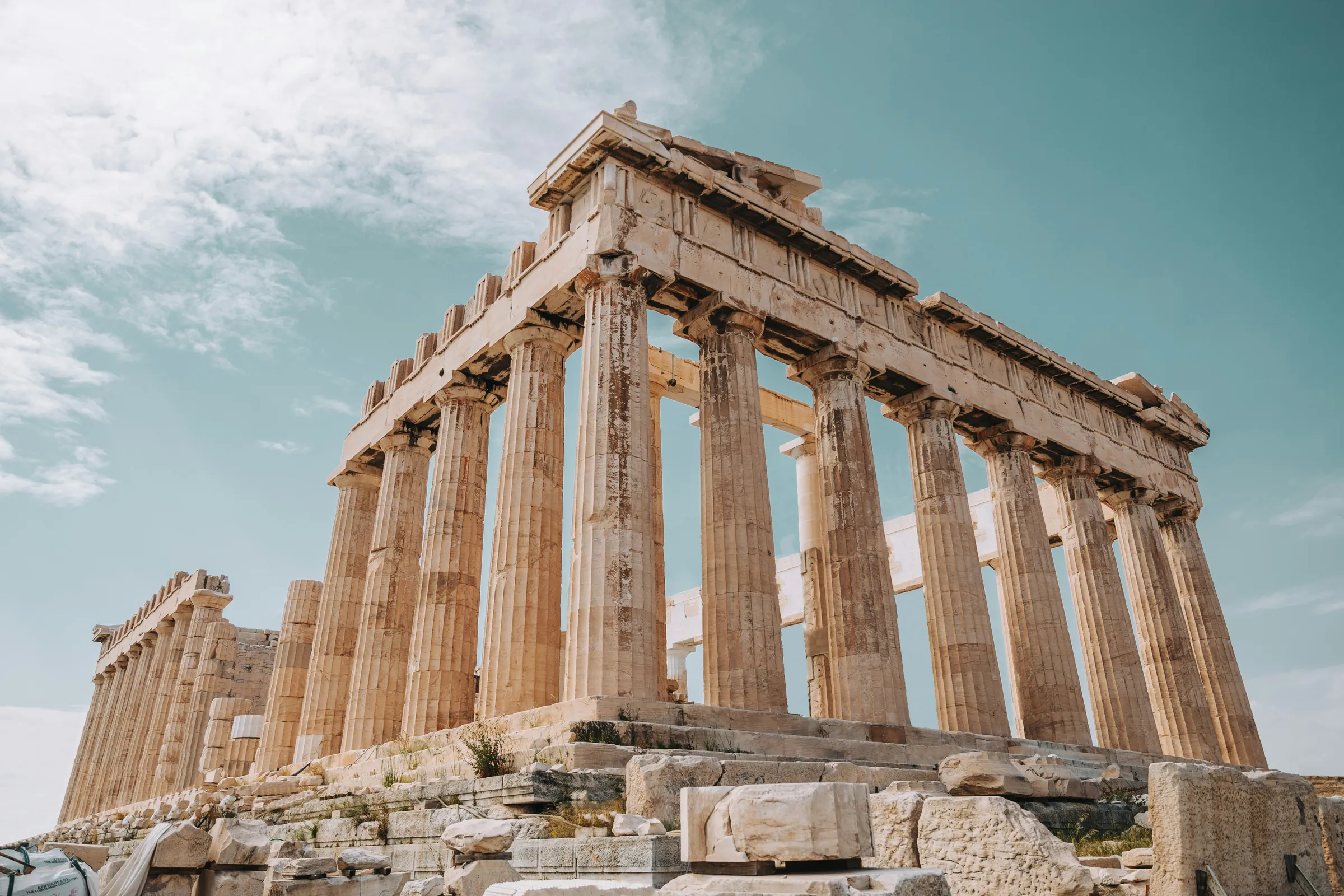
Start with the two Temples of Hera, which stand side by side in the southern part of the site and are the first thing most visitors see. The Temple of Hera I, around 550 BC, is the oldest — long misnamed 'the Basilica' — with a heavy, closely-spaced archaic colonnade and nine columns across its ends. Right beside it is the Temple of Hera II, around 450 BC, the masterpiece of the site and one of the most complete Doric temples in existence: its full colonnade, both pediments and much of its inner structure survive, and walking up to it conveys the scale and confidence of mature Greek architecture in a way photographs never quite manage.
Take time to walk all the way around both, and step inside the Temple of Hera II where permitted to see the inner colonnade. Comparing the two side by side is a lesson in a century of architectural evolution — from the heavy, slightly bulging columns of Hera I to the balanced proportions of Hera II. This is also the best spot to appreciate the warm travertine limestone the temples are built from, which shifts from pale grey in flat light to deep honey-gold in the low sun of early morning and late afternoon.
The Temple of Athena and the City
Walk north through the site to the Temple of Athena, set a little apart on higher ground. Built around 500 BC and once wrongly called the Temple of Ceres, it is smaller than the Temples of Hera but architecturally fascinating, combining Doric columns outside with Ionic features within, and it survived partly because it was used as a Christian church in the Middle Ages. Between the temples lie the remains of the ancient city: the Greek agora and a sacred pool, and the Roman forum, amphitheatre and streets laid out after Paestum became a Roman colony in 273 BC — so you walk through Greek and Roman layers in a single field.
Don't miss the city walls. Paestum is ringed by nearly five kilometres of well-preserved Greek-Lucanian fortifications, up to seven metres high in places, with four main gates and 24 towers — among the best-preserved ancient city walls anywhere. You can walk sections of them for a sense of the city's full extent and defences. The whole circuit gives Paestum a completeness that isolated temples elsewhere lack: this was a living, fortified city for a thousand years, and the layout makes that legible as you walk.
The Museum and the Tomb of the Diver
Save energy for the National Archaeological Museum beside the site, because its centrepiece is Paestum's single most important object: the Tomb of the Diver, painted around 470 BC. Its lid shows a lone young man diving into water — a serene, mysterious image read as the soul's passage into death — and it is the only complete example of Greek figurative wall painting to survive from the Archaic and Classical periods. Standing in front of it, you are looking at the only surviving window into a whole lost art form, which is why it draws scholars and visitors from around the world to an otherwise modest provincial museum.
The rest of the museum repays the time too. Highlights include the sculpted metopes from the Sanctuary of Hera at the mouth of the river Sele to the north, vivid Lucanian tomb paintings of banquets, duels and chariot races, and finds tracing the city through its Greek, Lucanian and Roman phases. The museum is compact enough to see properly in under an hour, and the air-conditioning makes it the ideal place to spend the hottest part of a summer day. With the 3-day ticket you can do the temples and the museum on the same day or split them — seeing both is what turns a row of columns into the story of a city.
Frequently asked
What are the must-sees at Paestum?
The Temple of Hera II (the most complete of the three Doric temples) and, in the museum, the Tomb of the Diver. Add the Temple of Hera I and the Temple of Athena, the Roman forum and amphitheatre, and the ancient city walls.
How many temples are there?
Three Doric temples: the Temple of Hera I (c. 550 BC), the Temple of Athena (c. 500 BC) and the Temple of Hera II (c. 450 BC). The Temple of Hera II is the largest and best-preserved.
What's the best order to see the site?
Start with the two Temples of Hera in the south, walk north to the Temple of Athena and through the Greek-Roman city, take in a stretch of the walls, then finish in the museum for the Tomb of the Diver — ideally during the hottest part of the day.
Why is the Tomb of the Diver so important?
It's the only complete example of Greek figurative wall painting to survive from the Archaic and Classical periods — everywhere else, ancient Greek painting is known only from descriptions or Roman copies. It's Paestum's single most precious object.
Can I go inside the temples?
You can walk right up to all three and, where permitted, step within the colonnade of the Temple of Hera II to see its inner structure. The temples are remarkably complete, so even from outside the scale is striking.
How long does the museum take?
About 45 minutes to an hour — it's compact but exceptional. Its air-conditioning makes it the ideal place to spend the hottest part of a summer day, and the 3-day ticket lets you fit it in whenever suits.
Are the city walls worth seeing?
Yes — Paestum has nearly 5 km of well-preserved Greek-Lucanian walls up to 7 m high, with four gates and 24 towers, among the best-preserved ancient city walls anywhere. Walking a section conveys the city's full extent.